Solar traffic signs have become a staple in modern road safety—they cut wiring costs, work off-grid, and stay visible even during power outages. Whether you’re a municipal buyer upgrading local roads, a contractor sourcing reliable gear for a highway project, or a dealer advising clients on long-term value, understanding how these signs work, their key types, and what to look for is critical. Below’s a no-nonsense breakdown of everything you need to know.
How Solar Traffic Signs Work—The Basics You Need to Explain to Clients
At their core, solar traffic signs are self-contained systems that turn sunlight into usable energy to power LED lights (the most common choice for visibility). Here’s the simple breakdown of their components—perfect for walking clients through why they’re a better choice than traditional wired signs:
- Solar Panels: These are usually mounted on top of the sign or a nearby pole. Most use monocrystalline or polycrystalline cells (mono is more efficient, poly is more budget-friendly). A typical 12×18-inch warning sign might use a 10W-20W panel—enough to charge the battery during daylight hours, even on cloudy days.
- Rechargeable Batteries: The panel feeds energy into a battery (usually lithium-ion or sealed lead-acid) that stores power for night or low-light conditions. Lithium-ion batteries last 5-7 years (vs. 2-3 for lead-acid) and handle extreme temperatures better—important for clients in places like Arizona (hot) or Minnesota (cold).
- LED Lights: LEDs are non-negotiable here—they use 75% less energy than incandescent bulbs and last 25x longer. Most signs have LEDs built into the sign face (like “STOP” letters or pedestrian symbols) or as border lights to make the sign pop at night. A standard solar stop sign might have 10-20 LEDs, with a brightness of 500-1000 lumens (bright enough to be seen 500+ feet away).
- Charge Controller: This small but vital part prevents the battery from overcharging (during bright days) or draining too low (on long cloudy stretches). It also switches the LEDs on automatically at dusk and off at dawn—no manual checks needed.
The best part? No trenching for power lines. For a rural road project, that can cut installation costs by 30-50% compared to wired signs. And if the grid goes down (like during a storm), solar signs keep working—critical for maintaining traffic flow and safety.
Key Types of Solar Traffic Signs (And Which Industries Need Them)
Not all solar traffic signs are the same—each type is built for a specific use case. As a dealer or contractor, matching the right sign to your client’s needs (municipal, highway, school zone) is how you add value. Here’s a breakdown of the most in-demand types, with real-world applications:
1. Solar Warning Signs
These are the most common—think “Curve Ahead,” “Deer Crossing,” or “Road Work” signs. They’re usually smaller (12×18 to 24×24 inches) and designed for low-to-medium traffic areas (local roads, suburban streets).
- Who needs them: Municipalities upgrading neighborhood safety, construction companies marking temporary work zones.
- Example: A solar “Slippery When Wet” sign near a bridge—LEDs flash gently at night to grab drivers’ attention without being distracting.
2. Solar Regulatory Signs
These are non-negotiable for traffic control: “STOP,” “YIELD,” “No Parking,” or speed limit signs. They’re sturdier (thicker aluminum faces) and have brighter LEDs (often 800+ lumens) to ensure compliance, even in heavy traffic.
- Who needs them: Cities replacing old wired stop signs in residential areas, counties adding speed limit signs on rural highways.
- Data point: A 2023 study by the Federal Highway Administration (FHWA) found that solar-powered stop signs reduced intersection violations by 22% compared to non-illuminated signs.
3. Solar Pedestrian & School Zone Signs
These prioritize vulnerable road users—think “School Zone 25 MPH” or “Pedestrian Crossing” signs with flashing LEDs. Many have motion sensors (to activate when a pedestrian steps into the crosswalk) or are synced to school bell times.
- Who needs them: School districts, towns with busy downtown crosswalks, universities with campus roads.
- Key feature: Most have “flash mode” (LEDs blink on/off) to increase visibility during drop-off/pick-up hours. A solar school zone sign might also have a battery backup that lasts 5+ days without sunlight (critical for winter months with short days).
4. Solar Construction Zone Signs
Temporary but tough—these are used for road repairs, detours, or lane closures. They’re lightweight (easy to move) but weather-resistant (wind, rain, snow) and have high-brightness LEDs (1000+ lumens) to cut through dust or fog.
- Who needs them: State DOTs, highway contractors, utility companies (for pipeline/electric work).
- Bonus: Many come with a portable solar panel (separate from the sign) so you can place the panel in direct sunlight even if the sign is in a shaded area (like a tree-lined road).
Critical Specs to Compare (For Dealers & Buyers)
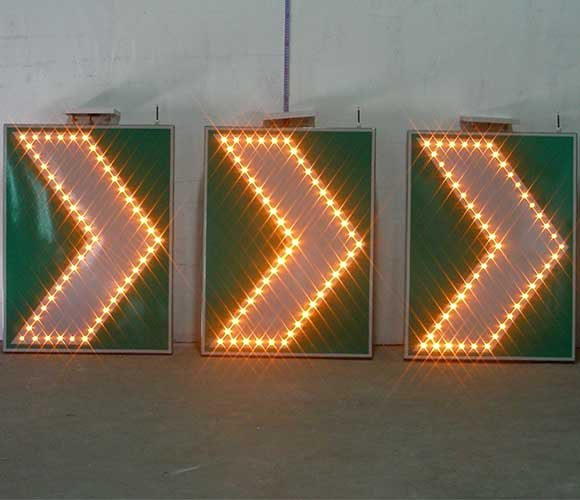
When evaluating solar traffic signs, don’t just look at price—focus on specs that impact longevity, performance, and ROI. Below’s a table of the most important factors, with benchmarks to guide your decisions:
| Specification | What It Means | Benchmark for Quality | Questions to Ask Suppliers |
|---|---|---|---|
| Solar Panel Efficiency | How well the panel converts sunlight to energy | Monocrystalline: 18-22% efficiency; Polycrystalline: 15-18% | “Is the panel rated for extreme temperatures (below -20°F or above 120°F)?” |
| Battery Life & Capacity | How long the battery lasts (in years) and how many hours it powers the sign | Lithium-ion: 5-7 years, 12V/10Ah (powers LEDs for 8-12 hours/night); Lead-acid: 2-3 years, 12V/7Ah | “Does the battery have a warranty (and what’s covered—defects, capacity loss)?” |
| LED Lifespan & Brightness | How long LEDs last and how visible they are | 50,000+ hours (5+ years of use), 500-1500 lumens (depending on sign type) | “Are the LEDs replaceable (in case one burns out) or is the whole sign face needed?” |
| Weather Resistance | How well the sign handles rain, snow, wind, UV | IP65 or higher (dust-tight, water-resistant); Wind rating: 90+ mph | “Has the sign been tested for salt spray (for coastal areas) or heavy snow?” |
| Autonomy (Days Without Sun) | How many days the sign works if there’s no sunlight | 3-7 days (depending on battery size); School/regulatory signs need 5+ days | “What’s the minimum sunlight needed to fully charge the battery (hours per day)?” |
For example: A solar stop sign for a coastal town should have an IP67 rating (waterproof, not just water-resistant) and a salt-spray test certification. A solar sign for Alaska needs a battery that works at -40°F and a panel that captures light in low winter sun angles.
ROI & Cost Savings—Numbers to Sell To Municipal Clients
Municipalities and DOTs care about budget—so having hard numbers on cost savings is key. Here’s how to frame the ROI of solar traffic signs (based on 2024 industry data):
- Installation Costs: Wired signs require trenching (to run power lines) and electrician labor—costs average $1,500-$3,000 per sign. Solar signs? $500-$1,000 per sign (no trenching, just mounting the panel and sign). For a project with 10 signs, that’s a savings of $10,000-$20,000 upfront.
- Operating Costs: Wired signs use electricity—about $15-$30 per sign per year (depending on LED usage). Solar signs? $0 (no electricity bill). Over 5 years, that’s $75-$150 saved per sign.
- Maintenance Costs: Traditional wired signs need wiring repairs (every 3-5 years, $200-$500 per fix) and bulb replacements (incandescent bulbs last 1-2 years, $50-$100 per change). Solar signs? LEDs last 5+ years, and batteries only need replacing every 3-7 years ($100-$200 per battery). Over 10 years, solar signs cost 60-70% less to maintain.
A real-world example: A small city in Ohio replaced 25 wired stop signs with solar models in 2022. They reported upfront savings of $37,500 (installation) and expect to save $6,250 over 10 years (electricity + maintenance). That’s a total ROI of 3 years.
FAQs for Solar Traffic Sign Dealers & Buyers
- Can solar traffic signs work in areas with low sunlight (like the Pacific Northwest)?
Yes—look for signs with high-efficiency monocrystalline panels (20%+ efficiency) and larger batteries (12V/12Ah or higher). Most models can handle 5-7 days of cloudy weather; some even have a “low-power mode” that dims LEDs slightly (but keeps them visible) to extend battery life. - Do solar traffic signs need permits?
It depends on the location—municipal roads usually require a permit from the local DOT, while private roads (like a shopping center parking lot) may not. Always check with the local traffic department—some areas have specific rules for sign brightness (to avoid distracting drivers) or panel placement (to prevent theft). - How do you maintain a solar traffic sign?
Basic maintenance is simple: Clean the solar panel every 3-6 months (wipe off dust, leaves, or snow—dirt can reduce efficiency by 10-15%) and check the battery connections annually (to make sure they’re tight). Most suppliers offer a 2-5 year warranty that covers panel/battery defects, so ask about that upfront. - Can solar signs be customized (like adding a town logo or specific message)?
Yes—most manufacturers offer custom faces (aluminum or reflective vinyl) with logos, custom text (like “Local Business Zone”), or unique symbols. Just note that customizations may add 2-4 weeks to the lead time and $50-$150 to the cost per sign. - Are solar traffic signs theft-proof?
They’re more theft-resistant than wired signs, but not 100% theft-proof. Look for signs with anti-theft mounting brackets (that require a special tool to remove) and solar panels that are bolted to the pole. Some models also have a GPS tracker option (for high-value signs in remote areas) that alerts you if the sign is moved.