
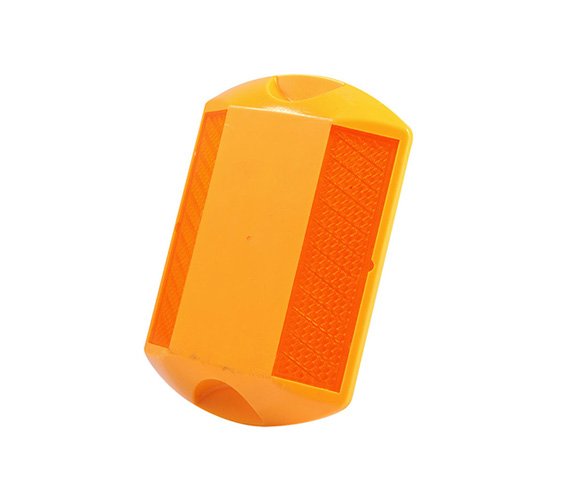

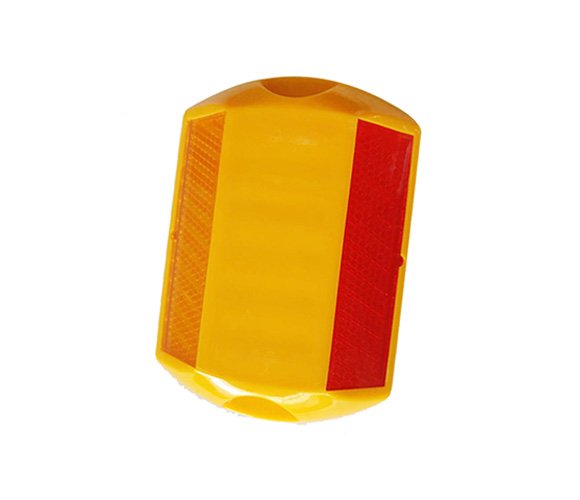
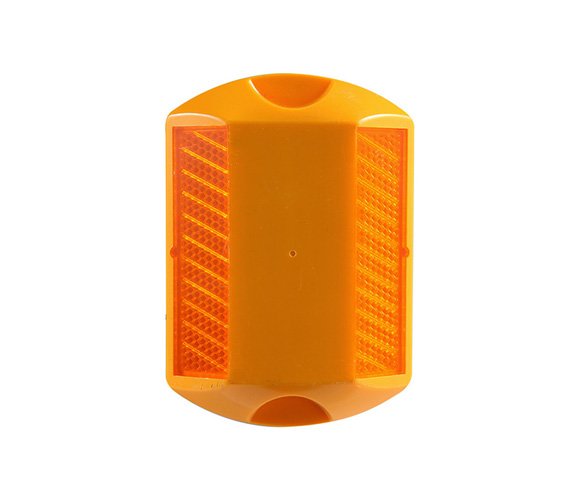
Description
Materials and Types of Reflective Road Markers:
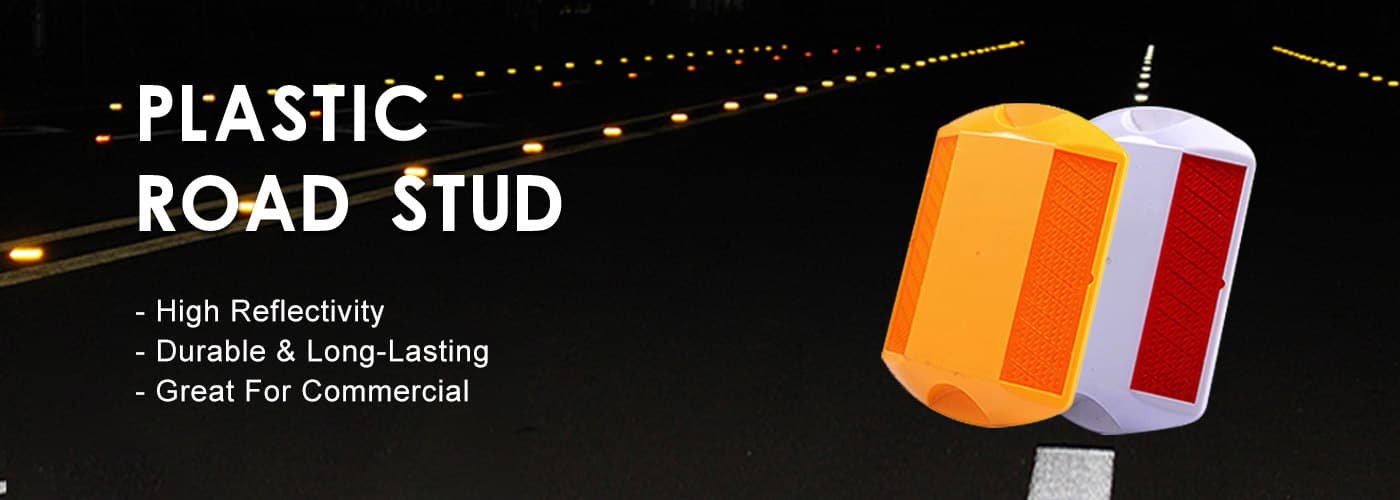
Reflective road markers are available in several materials, each chosen for its durability and reflective properties:
- Aluminum: Durable and able to withstand heavy traffic, ideal for use on highways with high-speed vehicles.
- ABS Plastic: Rigid and impact-resistant, suitable for areas with lighter traffic.
- Glass: Known for its excellent reflective capabilities due to its dome shape that gathers and reflects light.
- Ceramic and Metal: Occasionally used for their robust nature and long-lasting visibility.
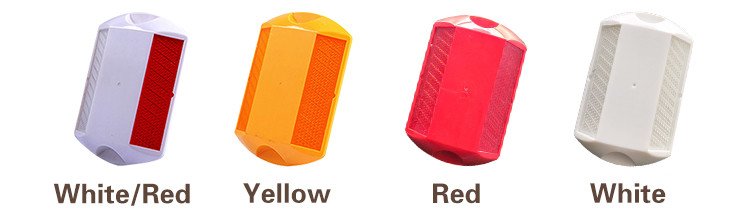
Color Coding of Reflective Road Markers:
The color of these markers is standardized to convey specific information about the road layout, which is critical for driver orientation and safety:
- White: These markers are used to delineate the lanes or the middle of the road. They are commonly seen between lanes on highways.
- Red: Positioned on the left edge of the road, these markers warn drivers not to cross over into hazardous or off-limit areas.
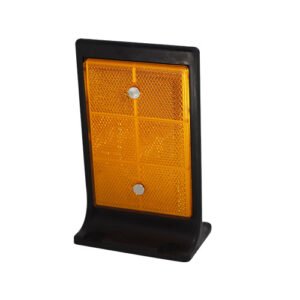
- Amber: Found along the central reservation of dual carriageways or motorways, helping to separate opposing lanes of traffic.
- Green: Placed at the edge of the main carriageway at lay-bys and slip roads, these markers guide drivers entering or exiting the main road.
- Green/Yellow: Used to signal temporary adjustments to lane layouts, such as in construction zones or during road maintenance, indicating shifts or merges in lanes.
Applications and Benefits:
Reflective road markers are essential for maintaining road safety and are used in various applications:
- Enhancing Nighttime Visibility: These markers retroreflect vehicle headlights, making them visible even in poor lighting conditions or bad weather.
- Guiding Traffic Flow: By marking lanes and road edges, they help manage traffic flow and prevent accidents.
- Indicating Road Changes: Temporary color changes (like green/yellow) alert drivers about changes in usual driving patterns due to road works.
Installation and Maintenance:
Installing these markers typically involves embedding them into the roadway surface or adhering them with strong glues or epoxy. While the installation process is straightforward, ensuring it is done correctly is crucial for the longevity and effectiveness of the markers. Regular maintenance checks are recommended to ensure they remain highly visible and firmly in place.
Specification :
| Size | 116*82*18mm (4.57″*3.23″*0.71″) |
| Body Material | ABS |
| Lens Material | PMMA |
| Color | Red, Yellow, White, Blue, Green |
| Filling | Epoxy+ Quartz Sand |
| Package: | 100pcs/carton |
| Carton size | 23.5*8.5*19.5cm (9.25″*3.35″*7.67″) |
| Weight: | 110g/pc; 11kg/ctn (0.24bs/pc; 24.25bs/ctn ) |
Reviews
There are no reviews yet.