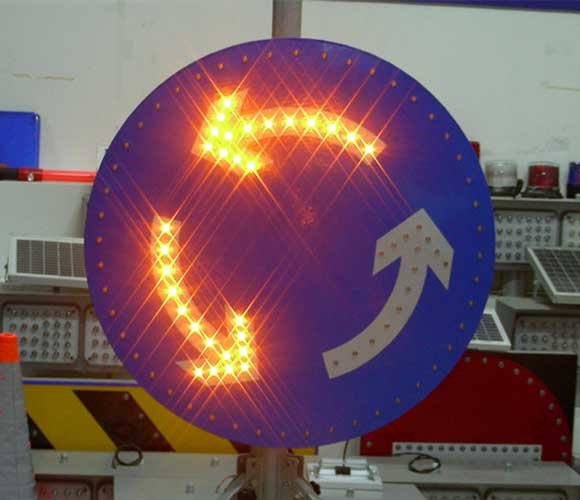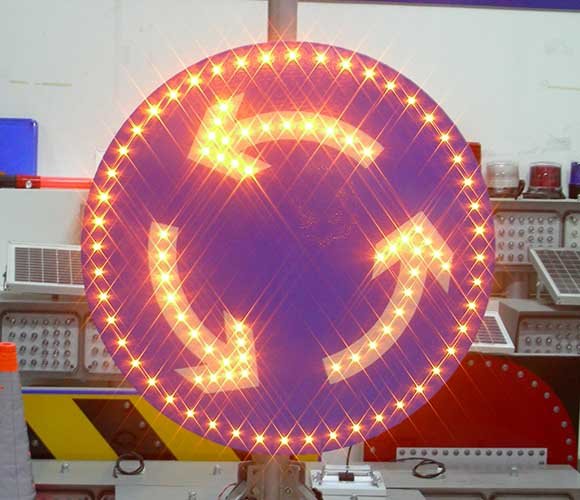
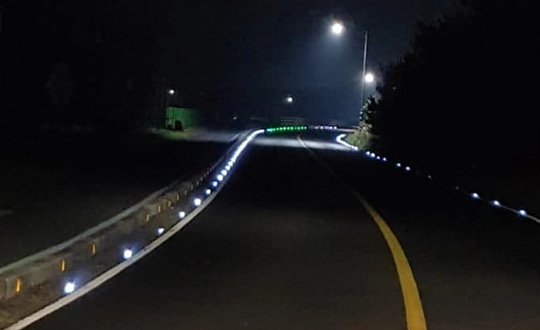
Stop losing customers to rivals with brighter, smarter, and more visible signage. The game has changed. Forget grid-dependent limitations and soaring electricity bills. Solar-powered traffic solutions aren’t just eco-friendly; they’re a direct competitive advantage, unlocking prime locations, 24/7 reliability, and serious profit margins. Here’s how deploying this tech lets you dominate your market.
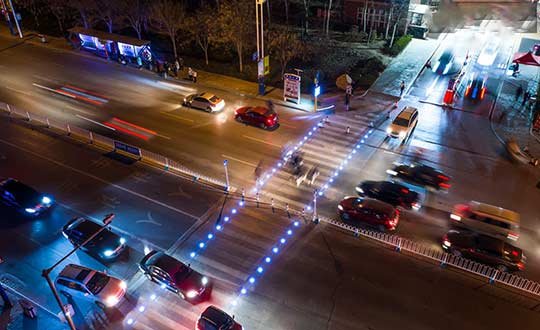
Why Solar Traffic Solutions Crush Grid-Powered Rivals
Grid power shackles your visibility. Solar liberates it. Here’s the concrete edge:
- Slash Operational Costs to the Bone: Zero electricity bills for sign lighting. Zip. Nada. Your competitors are literally paying the power company every month just to keep their lights on. That’s cash you save instantly, boosting your bottom line. Typical payback? 2-5 years based on sign size and local energy rates (US Avg: $0.15/kWh).
- Conquer Prime, Untapped Locations: Grid connection costs ($5k-$50k+) kill visibility dreams for corner lots, highway frontage, or remote sites. Solar? Install anywhere with sun. No trenches, no complex permits (beyond standard signage rules). Plant your flag where competitors physically can’t afford to.
- Guaranteed Uptime = Guaranteed Customers: Storms? Grid failures? Your competitor’s sign goes dark. Yours? Keeps shining. High-efficiency LEDs powered by robust battery backups ensure your business is seen 24/7/365. Reliability builds trust and captures impulse decisions.
- Instant Brand Upgrade & Customer Appeal: Sustainability isn’t niche; 68% of US consumers prefer buying from eco-conscious brands (Forbes 2024). A solar sign broadcasts your commitment visibly. It’s modern, innovative, and resonates – turning signage into a powerful brand statement.
- Future-Proof & Low Maintenance: Built for harsh weather. Minimal upkeep: occasional panel wipe-downs and a battery swap every 3-7 years (Lithium lasts longer). No transformers blowing, no wiring faults. Set it and dominate.
The Market Shift: Data Doesn’t Lie (Solar is Winning)
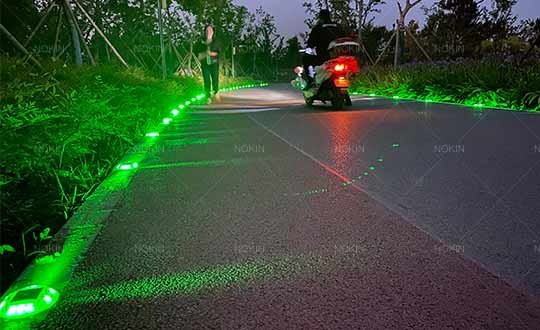
This isn’t greenwashing; it’s a massive commercial shift. Ignore it at your peril:
| Solar Traffic Solutions Market Momentum (2024) | Real Data |
|---|---|
| Global Market Value (2024) | $2.1 Billion (Grand View Research) |
| Projected Growth (CAGR 2024-2030) | 14.2% |
| #1 Adoption Driver | ROI + Energy Independence (Business Wire) |
| Avg. US Commercial Electricity Cost Increase (YoY) | 5.8% (EIA) |
| Key Gov. Incentive (US Example) | 30% Federal ITC Tax Credit on total system cost |
Industry Leaders Are Already Stealing Market Share:
- Fuel & Convenience Stores: “Our solar price sign stays lit 24/7 while our competitor down the street constantly flickers during peak rates. Customers notice reliability. Our fuel margin is up 1.5% since switching.” – Regional C-Store Chain Owner. Edge: Always-on pricing, zero operational cost per sign.
- Quick Service Restaurants (QSRs): “Drive-thru speed is king. Our solar menu boards never dim during rush hour, unlike the grid-dependent chain across town. Our order accuracy and throughput improved instantly.” – National QSR Franchisee. Edge: Flawless customer experience, prime corner lot visibility without $40k+ electrical trenching.
- Automotive Dealerships: “We placed solar-lit inventory flags and promo signs right at the highway exit where competitors couldn’t afford grid power. Web traffic from ‘near highway exit’ searches jumped 22% in 3 months.” – Auto Group Marketing Director. Edge: Capturing high-intent traffic at critical decision points.
- Real Estate Developers: “Solar-lit monument signs at our new community entrance went in before power infrastructure. We started generating leads 6 months earlier than planned, outselling the phase without solar signage.” – National Homebuilder VP. Edge: Speed to market, premium sustainable image from day one.
- Municipalities: “Converting downtown parking info signs to solar freed up $27k/year in our operating budget previously spent on electricity and grid maintenance. We reallocated it to public safety.” – City Manager, Midwest US. Edge: Taxpayer savings, critical info always available.
Optimizing Your Solar Sign for Maximum Competitive Punch
Solar solves the power problem. Smart design and placement deliver the knockout blow:
- Location Intelligence is Key: Use traffic count data. Target high ADT (Average Daily Traffic) routes, key intersections, or underserved areas competitors ignore due to grid costs. Solar lets you own these visibility goldmines.
- Brighter, Cleaner, Faster Read: Invest in high-CRI LEDs (90+). Ensure uniform brightness across the entire sign face. No dark spots. Use high-contrast color combos (e.g., white on dark blue, black on yellow). Fonts must be ultra-legible at speed (e.g., Highway Gothic). Clutter kills impact – state your name, core offer, website/phone. Under 5 seconds to grasp.
- Durability = Sustained Dominance: Specify commercial-grade materials:
- Panels: Monocrystalline (22%+ efficiency).
- Batteries: Lithium Iron Phosphate (LiFePO4 – longer life, wider temp range) or high-quality Deep Cycle AGM.
- Structure: Heavy-duty aluminum, marine-grade finishes.
- Face: UV-stable acrylic or polycarbonate.
- Smart System Sizing is Non-Negotiable: A system sized for Miami sun fails in Seattle. Demand a site-specific energy audit:
- Peak Sun Hours: Location-specific historical data (NREL data).
- LED Wattage: Total consumption per night.
- Autonomy Days: Minimum 3-5 days reserve (covers storms/winter). Oversize slightly for safety.
- Charge Controller: MPPT type (Max Power Point Tracking) for max efficiency.
Choosing Your Weapon: Critical Solar Sign Specs
Don’t buy a generic box. Demand these specs to beat competitors:
- Solar Panel Efficiency: >22% Monocrystalline. Wattage must exceed daily LED consumption + recharge needs. (e.g., 300W panel for a 100W nightly load + recharge).
- Battery Chemistry & Capacity: LiFePO4 preferred: 10+ year lifespan, 80%+ Depth of Discharge (DoD) safe. Capacity (Ah) must support LEDs for autonomy days plus buffer. Calculate rigorously.
- LED Performance: Luminous Efficacy >120 lm/W. High CRI (>80). Rated Lifespan: >50,000 hours (L70). IP66+ waterproof rating. Even light distribution (no hotspots).
- Controller Intelligence: MPPT controller mandatory. Features: Temperature compensation, battery protection (over-charge/discharge), LCD status display, remote monitoring option.
- Structural Warranty: Minimum 5 years on materials and workmanship. Panel warranty: 25 years performance (80%+ output), 10-12 years product. Battery warranty: 5-10 years. LED warranty: 5 years.
Solar Traffic Solutions: Your Competitive Edge FAQs
- Q: How long until I see ROI vs. a traditional sign?
- A: Typically 2-5 years, driven by local electricity costs ($0.10/kWh vs. $0.30/kWh makes a huge difference) and sign size/usage. The 30% Federal ITC credit slashes the upfront cost significantly. Factor in zero monthly electricity bills. Your competitor’s sign costs them money every single month forever.
- Q: Will it work reliably in [My Cloudy/Northern City]?
- A: Absolutely, if sized correctly. Modern LiFePO4 batteries handle deep cycles. MPPT controllers maximize harvest on cloudy days. Design includes 3-5+ days autonomy precisely for low-sun periods. Locations like Seattle or Toronto have successful deployments – proper engineering is key.
- Q: Aren’t solar signs easily vandalized or stolen?
- A: Risk is comparable to traditional signs. Mitigations: Tamper-proof bolts, security lugs for panels, pole-mounted panels (out of reach), placement in well-trafficked/viewed areas, security cameras. The internal components (battery, controller) are typically housed securely within the sign structure.
- Q: What’s the real maintenance commitment?
- A: Extremely low: Clean panels 1-4 times/year (especially if under trees/dusty). Annual visual check of connections/structure. Battery replacement is the main scheduled cost every 7-12 years (LiFePO4). Contrast with potential grid sign transformer/wiring issues.
- Q: How do incentives work? Is it complicated?
- A: The US Federal ITC (30%) is straightforward for commercial entities: Deduct 30% of the total installed cost from your federal tax liability. Always consult your tax advisor. Check DSIRE.org for state/local incentives (rebates, grants, property tax exemptions). Reputable solar sign suppliers handle incentive paperwork support.
The competitive landscape is illuminated. While rivals grapple with grid dependency and rising costs, solar traffic solutions offer a clear path to lower expenses, superior reliability, and unbeatable visibility. It’s not just about saving money; it’s about capturing market share, enhancing your brand, and operating with ruthless efficiency. The technology is proven, the incentives are strong, and the first-mover advantage is real. Is your business ready to shine?